
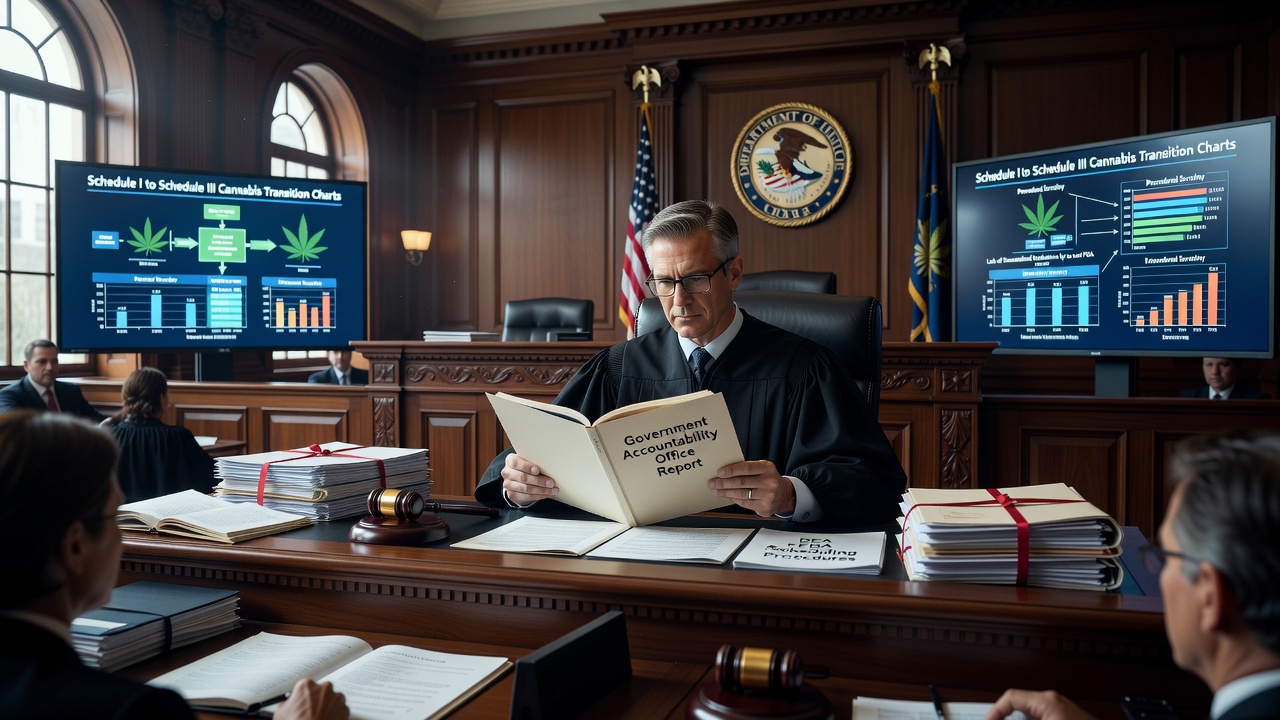
The timeline for cannabis rescheduling just got murkier. DEA Chief Administrative Law Judge Derek C. Julius has paused upcoming hearings to decide whether a new Government Accountability Office report belongs in the evidentiary record. The report takes aim at the DEA and FDA for lacking documented, standardized procedures when scheduling controlled substances - a finding that lands directly on top of the ongoing effort to move cannabis from Schedule I to Schedule III.
What the GAO Report Actually Challenges
Here's the catch: this isn't a dispute over whether cannabis should be rescheduled. It's a dispute over whether the process used to get there can withstand scrutiny. According to the GAO findings, neither agency maintains formal protocols for conducting the scientific and medical evaluations required under the scheduling framework. That's a procedural gap, not a policy objection - but procedural gaps are exactly the kind of thing that give administrative law judges reason to slow down and ask questions before admitting evidence.
If Judge Julius determines the report should be part of the record, attorneys on all sides will need time to respond to it, incorporate it into arguments, or challenge its relevance. That alone can add weeks or months to a hearing schedule already running on no particular deadline.
Why Operators Should Care About a Procedural Pause
A Schedule III designation would eliminate the 280E tax burden that currently blocks cannabis businesses from deducting ordinary business expenses - rent, payroll, marketing - the way any other retailer can. It would also ease, though not fully resolve, the banking restrictions that keep so much of the industry running on cash and complicate everything from payroll to vendor payments to basic point-of-sale reconciliation.
That outcome still sounds tidy on paper. In practice, though, judicial pauses like this one are a reminder that rescheduling isn't a single vote or a single signature - it's a contested administrative proceeding with its own evidentiary rules, its own appeals, and its own capacity to stall. If the hearings are forced to account for new compliance frameworks or revised evaluation standards, the final decision could be pushed out considerably further than operators have been planning for.
Operating Under Current Rules, Not Future Ones
Dispensary owners and brand managers should not treat this as a reason to change anything yet. Tax strategy, inventory accounting, and compliance logs should continue to reflect the world as it exists today - meaning 280E still applies, interstate banking limitations still apply, and seed-to-sale tracking obligations under state systems like METRC haven't moved an inch.
- Continue budgeting and filing under current 280E constraints
- Maintain existing compliance documentation and lab testing/COA practices without assuming regulatory relief
- Track hearing developments through legal counsel rather than news cycles alone
- Build contingency financial models for a Schedule III scenario, but don't implement them prematurely
What's striking here is how little control operators actually have over this timeline, despite how much rides on it. Multi-state operators with thin margins under 280E, independent brands negotiating wholesale pricing, payment processors waiting on clearer banking rules - all of them are watching a federal judge decide what counts as evidence. That's the reality of the moment. Not a verdict, not a delay with a defined end date, just another procedural checkpoint in a process that keeps finding new ones.