
DEA Rescheduling Hearing Opens With Government Standing Alone Against Every Opponent
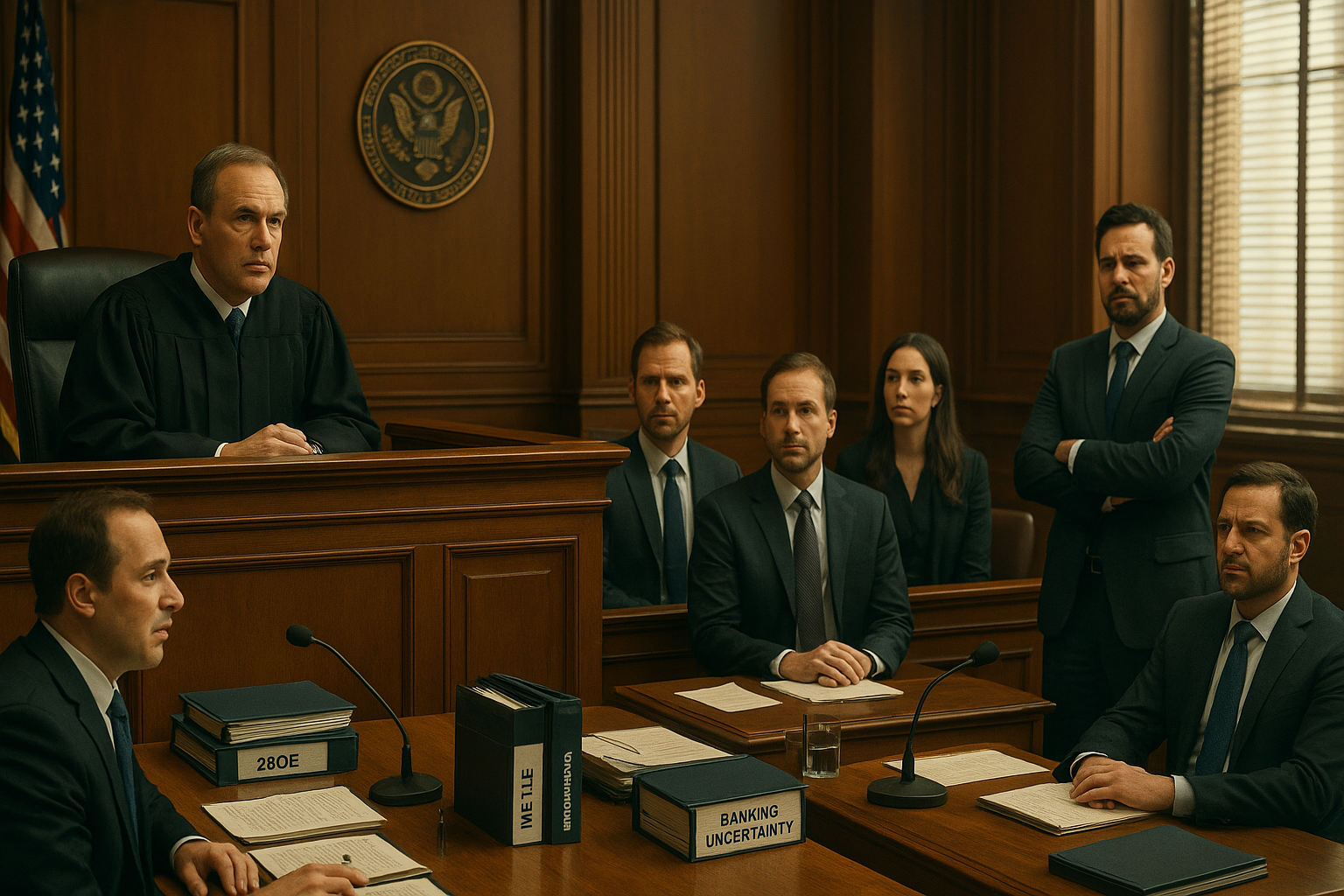
The federal government defended its own marijuana rescheduling proposal in an Arlington, Virginia courtroom Monday - and did so without a single allied voice in the room. Every other participant at the Drug Enforcement Administration's administrative hearing arrived to oppose moving cannabis from Schedule I to Schedule III, making for an unusual opening day in what is already an unusually consequential proceeding for licensed cannabis operators across the country.
For dispensary owners and multi-state operators who have spent years building compliance infrastructure around federal prohibition - absorbing the punishing reach of 280E tax treatment, managing banking relationships that exist in a state of perpetual uncertainty, and investing in systems like Metrc-compliant POS for New York and other regulated markets - this hearing represents something more than a policy debate. The scheduling outcome will shape whether licensed cannabis businesses gain meaningful access to federal banking protections, can deduct ordinary business expenses, or continue operating in the financial and regulatory no-man's land that has defined the industry for decades.
DEA attorney James J. Schwartz framed the proceeding plainly in his opening: this is about "regulation, not legalization." The government carries the burden of proving marijuana meets three criteria for Schedule III classification - currently accepted medical use, lower abuse potential than Schedule I and II substances, and limited dependence potential. The government's first witness, Dominic Chiapperino, director of the controlled substance staff at the FDA's Center for Drug Evaluation and Research, testified that marijuana's overdose potential is "much lower" than other Schedule I drugs and Schedule II opioids. He compared cannabis withdrawal to tobacco withdrawal and noted, pointedly, that alcohol withdrawal can cause seizures and death.
What the Tribunal Is Actually Deciding
Here's the catch: Chief Administrative Law Judge Derek C. Julius has narrowed the hearing's scope significantly. He confined testimony to botanical marijuana - the plant itself, still in Schedule I - setting aside the medical and FDA-approved cannabis-derived products that Acting Attorney General Todd Blanche moved to Schedule III in April. That distinction matters enormously to the industry. FDA-approved pharmaceutical products like Epidiolex were never really the sticking point for most operators. Botanical cannabis, the product sitting in every dispensary display case and wholesale manifest in the country, is what licensed businesses actually sell.
Each of the seven opposing parties may cross-examine the government's two witnesses for an hour each; the government gets equal time with opposing witnesses. Cross-examination of Chiapperino began the same day he testified and was expected to continue into the hearing's second day, when New Hampshire pain physician Corey Burchman was scheduled to begin his testimony. The hearing is set to conclude no later than July 15. Whatever recommendation Judge Julius issues will be nonbinding - and further litigation is widely expected regardless of how his findings read.
Opposition Arguments and the Debate Over Medical Use
The opposing parties are expected to press a single technically powerful argument: botanical marijuana cannot have a "currently accepted medical use" under federal standards because no botanical cannabis product has received FDA approval. It's a narrow legal read, but it's the kind of statutory hook that has derailed regulatory proceedings before. The hearing replaces an earlier rescheduling process under the Biden administration that stalled in litigation before Blanche terminated it in April.
Outside the courtroom, Kevin Sabet - president and CEO of Smart Approaches to Marijuana - posted a video to social media during a lunch break, accusing the government of lying and attributing the rescheduling push to political pressure and cannabis industry campaign donations. He cited Trulieve CEO Kim Rivers by name. Fair enough as political commentary, but the tribunal isn't deciding who donated what to whom. Judge Julius is working through a statutory standard, not a campaign finance review.
What Operators Should Watch - and Why the Outcome Isn't Settled
The proceeding was not livestreamed. Accounts of Monday's testimony came from people present in the courtroom - a detail worth sitting with for a moment. A hearing with direct implications for thousands of licensed dispensaries, hundreds of wholesale suppliers, and the entire infrastructure of regulated cannabis retail in the United States was not made publicly accessible in real time.
For compliance officers, operators, and investors, the near-term risk calculus remains the same whether rescheduling proceeds or stalls. The 280E tax burden - which disallows standard business deductions for businesses trafficking in Schedule I or II controlled substances - stays in place as long as cannabis remains in those schedules. A move to Schedule III would lift that restriction, meaningfully changing dispensary economics almost immediately. Banking access, merchant account stability, and the ability to use standard point-of-sale payment processing without the friction that currently plagues the space would all follow, though not overnight and not without additional regulatory steps.
The proceeding will conclude by mid-July. After that comes the administrative recommendation, then the review process, then - in all likelihood - more litigation. The industry has been here before: watching a federal process that looks like progress, knowing the finish line keeps moving. That doesn't make this hearing irrelevant. It makes understanding exactly what's being argued, and why, more important than ever.