
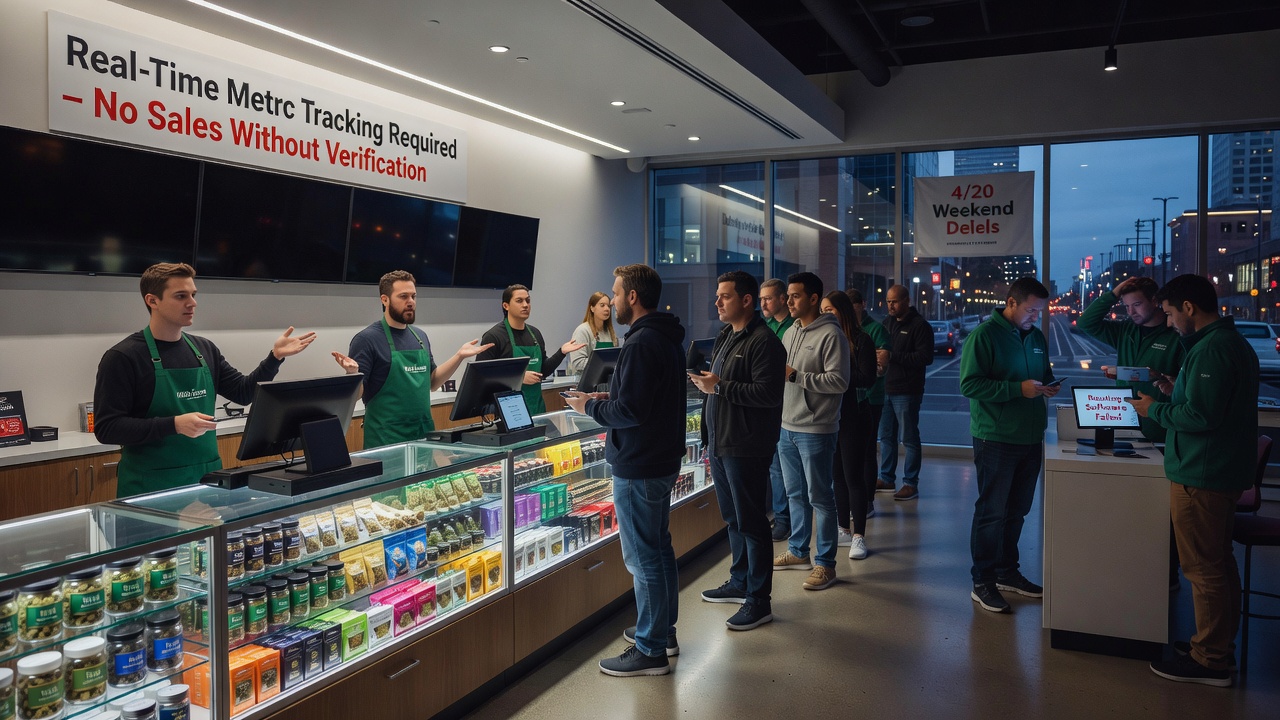
When a dispensary's point-of-sale system goes down, the business doesn't slow - it stops. Unlike a corner store that can take cash and sort out the register later, a licensed cannabis retailer cannot legally sell a gram without verifying ID, checking purchase limits, and logging the transaction to the state's seed-to-sale tracking system. No connection, no sale. That single compliance requirement turns a routine tech outage into a full operational shutdown, and it's a risk most operators haven't priced correctly.
Why Cannabis Retail Can't Fall Back on Cash
Every other retail category has a workaround for a frozen POS terminal: paper receipts, manual card swipes, cash drawers reconciled after the fact. Cannabis doesn't get that option. Regulatory frameworks in nearly every adult-use and medical market require real-time reporting to state tracking platforms like Metrc as a condition of the license itself. Skip that step, even for an hour, and the dispensary is operating outside its compliance obligations - regardless of intent. That's the uncomfortable math behind cannabis POS downtime: it's not just lost revenue, it's a potential licensing violation layered on top of lost revenue.
The direct hit is calculable - average hourly sales volume multiplied by hours offline - and it scales fast on a Friday evening or during a holiday rush, when foot traffic and online orders peak at the exact moment systems are most likely to buckle under load.
The Costs That Keep Running After the Screens Go Black
Budtenders, security staff, and inventory teams stay on the clock during an outage even though nothing is moving across the counter. Labor costs don't pause just because the registers did. Delivery operations take a separate hit: routing software, driver manifests, and ID verification tools often run through the same POS backbone, so a crash can strand delivery fleets mid-route and blow through customer delivery windows. Add in the reputational cost - customers who show up or order online and find a dark menu tend not to come back, especially in competitive markets with no shortage of alternative dispensaries nearby.
The industry has already seen what this looks like at scale. A widely felt outage on a major cannabis POS platform during 4/20 - one of the highest-volume days on the retail calendar - left dispensaries across multiple states unable to transact for hours. That kind of event doesn't just cost a day's sales; it damages customer trust in ways that linger well past the outage itself.
Where Standard Insurance Falls Short
Here's the catch most operators miss: a standard Cyber Liability policy typically responds to breaches - ransomware, hacking, stolen customer data - not to a third-party server crash or a SaaS vendor's technical failure. If the outage originates with the POS provider rather than an attack on the dispensary's own network, that policy may never trigger. To close that gap, operators need Contingent Business Interruption coverage or Dependent System Failure endorsements built specifically around reliance on outside technology vendors.
- Cyber Liability: covers forensics, system restoration, notification costs, and legal defense tied to security incidents
- Contingent Business Interruption: covers lost income when a third-party system - not the dispensary's own network - fails
- Tech Errors & Omissions: covers POS vendors and software providers when their product failures cause client financial losses
A Shared Risk Between Operators and Software Vendors
This isn't only a dispensary problem. POS and menu-integration vendors carry exposure, too. When a platform crashes on a peak sales day and dispensary clients lose real money, breach-of-contract claims and lawsuits over lost profits are a real possibility. Tech E&O insurance is built for exactly that scenario, covering legal defense, settlements, and judgments tied to software failure. Redundant hardware and backup internet connections are worth having, but they don't substitute for financial coverage when the failure originates outside the dispensary's own walls. In practice, though, the operators who treat insurance as part of their tech stack - not an afterthought to it - are the ones who recover fastest when the screens go dark.