
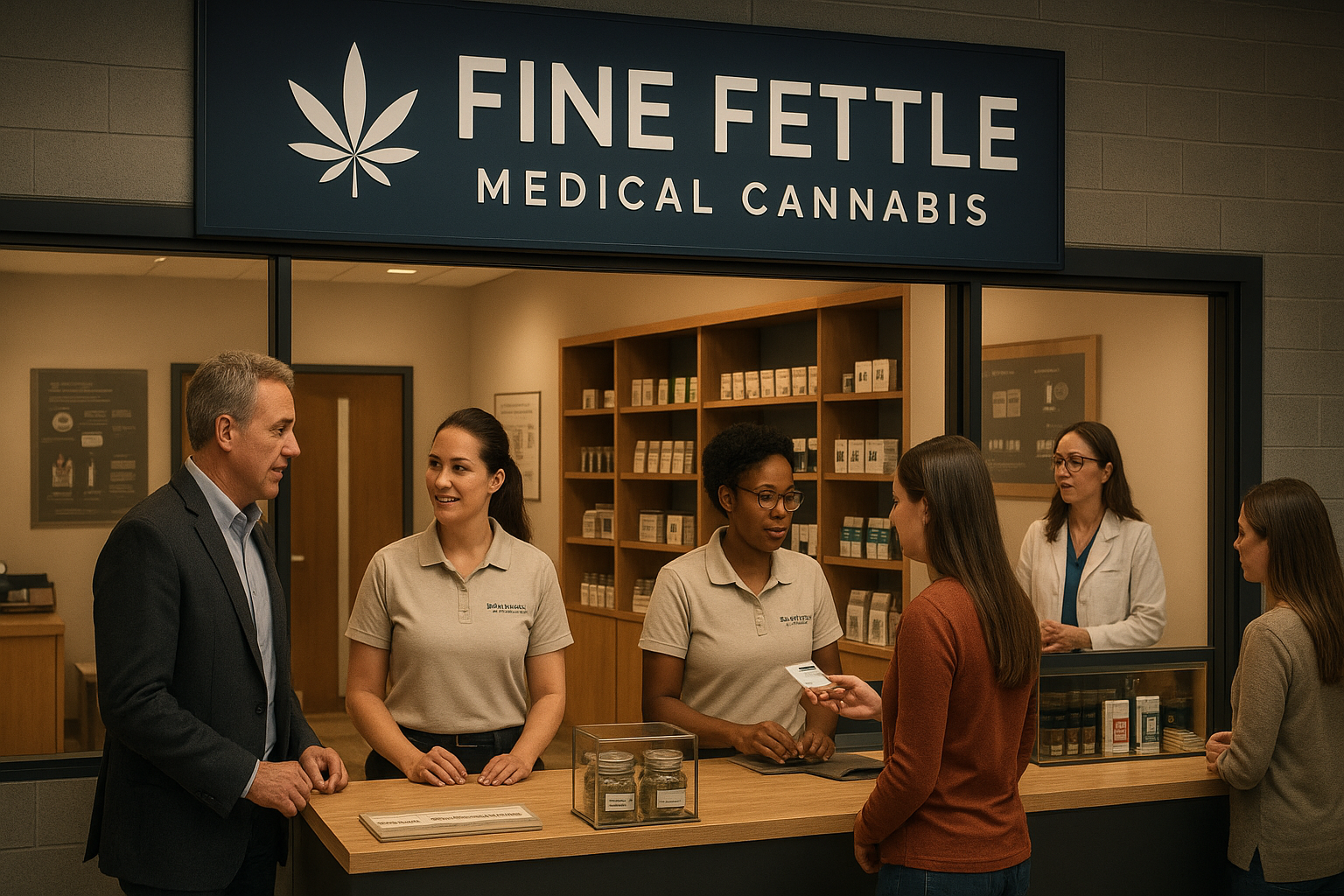
Fine Fettle opened a medical cannabis dispensary in Evans, Georgia, last Friday - bringing licensed access to a region operators had identified as underserved. The timing is deliberate: Georgia recently passed legislation that, starting July 1st, allows registered medical cannabis patients to purchase flower and vape products for the first time, a meaningful expansion from the state's previous low-THC oil framework.
That shift matters operationally, not just symbolically. For years, Georgia's program confined dispensaries to low-THC oil products capped at less than 5% THC - a restriction that limited both patient options and retail inventory depth. Expanding to flower and inhalable vaporizer products requires dispensary operators to rethink SKU management, storage infrastructure, and compliance workflows almost overnight. Multi-state operators familiar with this kind of product-line expansion - such as those running a Missouri dispensary POS platform across a broader medical and adult-use menu - know that adding inhalable categories means retraining staff on product handling, updating seed-to-sale tracking entries, and ensuring compliant packaging protocols are in place before product hits the sales floor.
Judson Hill, market president for Fine Fettle in Georgia, described the previous low-THC oil products as slower-acting and pharmacologically weaker than what patients in more mature medical markets have long accessed. Flower and vaporizers, by contrast, offer faster onset - a difference that carries real implications for patient counseling at the point of sale. Budroom staff will need to communicate product differences clearly and consistently, without crossing into medical advice. That's a compliance line every dispensary operator in an expanding market has to hold carefully.
What the Potency Change Actually Means for Retail Operations
Dr. Tiffani Forbes, medical director and owner of Better Health Wellness, framed the legislative change plainly: Georgia is moving from a low-THC state to what is broadly understood as a medical cannabis state. The practical retail consequence is that dispensaries can now stock products with higher milligram counts and a wider range of delivery formats - which directly affects wholesale purchasing, inventory management, and product batch compliance documentation.
Here's the catch, though. Expanding product eligibility doesn't automatically mean supply is ready. Operators entering a newly expanded product category face the immediate challenge of sourcing compliant inventory - products with valid certificates of analysis, proper labeling under state rules, and packaging that meets Georgia's medical program standards. Getting that supply chain aligned before July 1st is not a paperwork formality. It's an operational deadline with real shelf consequences if missed.
Evans as a Market Entry Point - and What It Signals
Georgia currently has 15 licensed medical cannabis dispensaries statewide. That's a small footprint for a state of its size, which is precisely why Evans - in Columbia County, east of Augusta - was characterized as underserved by operators entering the market. License caps and restricted program frameworks often produce exactly this kind of geographic concentration, where dispensaries cluster in major metro areas and rural or suburban communities go without access for years.
For the B2B side of the industry - landlords, real estate developers, point-of-sale vendors, packaging suppliers, and compliance software providers - a state transitioning from a narrow low-THC program to a fuller medical model represents a real market entry moment. Retail footprints tend to expand when product eligibility expands. Operators have stronger revenue cases to make when they're not limited to a single product format with a restricted potency ceiling. That said, the Georgia program remains medical-only. Adult-use is not part of this legislation, and the compliance requirements that come with serving registered patients - patient verification, purchase limits, documentation - don't disappear as the product menu grows. They expand alongside it.
Compliance Doesn't Get Simpler as Menus Get Broader
The addition of flower and vaporizer products to Georgia dispensary shelves brings a category that demands more rigorous inventory tracking than oil products alone. Flower, in particular, requires careful weight-based tracking, proper humidity-controlled storage, and frequent inventory reconciliation to prevent shrinkage discrepancies in compliance logs. Vaporizer products introduce hardware components - cartridges, batteries, delivery devices - that carry their own labeling and testing documentation requirements.
Retail technology vendors and compliance consultants active in other restricted medical markets will recognize this pattern. The moment a state's approved product list grows, the back-office burden on operators grows with it. POS systems need to reflect updated product categories. Staff need to understand how to log sales accurately under the expanded framework. And any dispensary operating in Georgia's medical program still has an obligation to verify patient registration status at the point of sale - a non-negotiable compliance requirement that doesn't relax regardless of how varied the product selection becomes.
What Fine Fettle's Evans opening signals, more than anything, is that Georgia's medical cannabis market is entering a new operational phase. Fifteen dispensaries across an entire state is not saturation - it's an early infrastructure. Whether the state's regulatory framework moves to accommodate more licensees, and how quickly the supply chain catches up to the expanded product menu, will determine how that infrastructure actually serves patients over the next 12 to 18 months.