
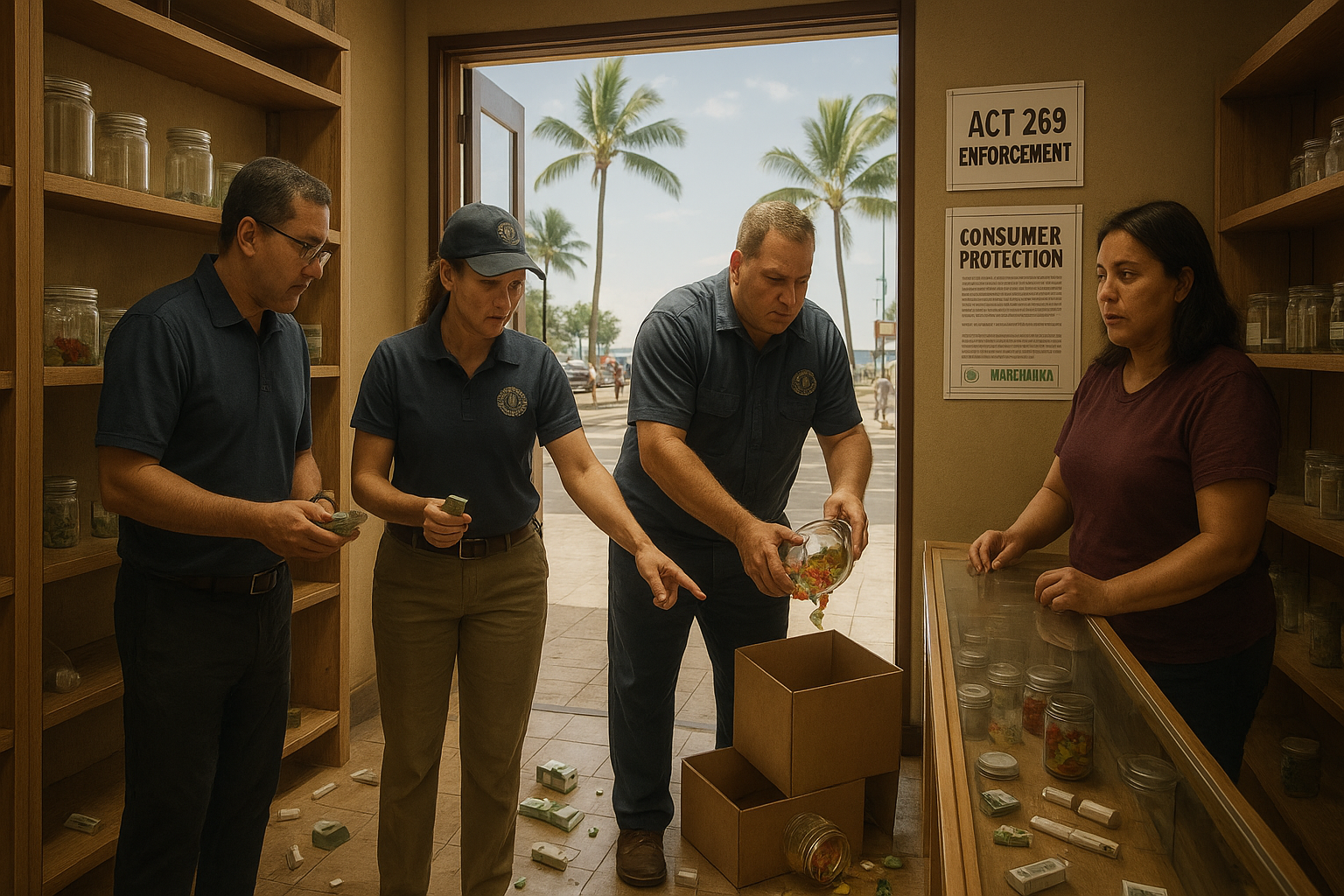
Hawaiʻi's Department of Health has moved to cut off the sale of hemp-derived THC products - pre-rolled cigarettes, gummies, vapes - at retail shops across the islands that had operated outside the state's medical marijuana licensing system. The enforcement push, now underway at stores in Waikīkī and beyond, has emptied shelves that once carried a wide range of intoxicating hemp goods sold without a medical card. For operators who built entire storefronts around this category, the shift has been sudden and, in at least one case, has landed in federal court.
The mechanics of how this happened matter for anyone watching cannabis retail policy nationally. Hemp became federally legal under the 2018 Farm Bill, provided it contains no more than 0.3% delta-9 THC by weight - a threshold that, thanks to extraction and formulation techniques, did nothing to stop manufacturers from producing plenty of psychoactive product. Hawaiʻi's Legislature legalized hemp cultivation in 2020 but never authorized retail sale of hemp-derived THC goods, leaving a gap that dozens of shops exploited for years. Retailers operating in that gray zone typically ran lean, often without the seed-to-sale tracking, compliance logging, or lab-testing regimes required of licensed dispensaries - a contrast that matters for point-of-sale infrastructure too. Licensed operators elsewhere have increasingly turned to specialized retail systems, including options like cannabis pos vermont, precisely because regulators expect verifiable transaction records, not just a cash drawer and a shelf of unregulated SKUs. cannabis pos vermont
That compliance gap is the real story here, not just the shuttered shelves. Hawaiʻi's eight licensed medical dispensaries operate under strict testing, packaging, and inventory-tracking rules, plus a state-imposed cap on how many retail locations each license holder can run. Unlicensed hemp retailers faced none of that - no certificate of analysis requirements, no state registration, no inspection regime - until Act 269 changed the equation this year by giving the Department of Health authority to require registration and conduct compliance sweeps.
Why Regulators Drew the Line
State officials frame the crackdown as consumer protection, not just market management. Products sold outside the licensed system hadn't gone through the same lab-testing and potency-verification standards that medical dispensaries must meet, meaning buyers had limited assurance about what was actually in a gummy or a pre-roll. That's a real concern in a retail environment where mislabeled potency or inconsistent dosing can create genuine safety risk, particularly for consumers unfamiliar with hemp-derived THC's effects relative to traditional flower.
At the same time, the enforcement action can't be separated from its economic backdrop. Licensed dispensaries had watched their share of Hawaiʻi's cannabis market shrink as unregistered retailers multiplied, and enrollment in the state's medical marijuana card program had been declining for years. Whether the new rules restore balance or simply shift consumers back toward a smaller, pricier licensed market remains an open question - one now tangled up in federal litigation over supremacy clause and interstate commerce arguments that could reshape how states handle hemp-derived THC long after Hawaiʻi's case is decided.
What Operators Should Watch Next
Congress has already moved to close the federal loophole that enabled this entire product category, with a redefinition of hemp signed into law in 2025 and an effective date pushed into December. For dispensary operators, wholesalers, and brands built around hemp-derived THC, that timeline compresses the runway to adjust wholesale menus, inventory, and compliant packaging before the rules tighten nationally - not just in Hawaiʻi.
- Retailers should confirm registration status with state health authorities before restocking any hemp-based product line.
- Multi-state operators should audit SKU management against both state law and the pending federal hemp redefinition.
- Payment providers and POS vendors should anticipate demand for tighter compliance logging as states move toward dispensary-style oversight of hemp retail.
Fair enough to say Hawaiʻi's fight is a local one for now. But the underlying tension - federally legal hemp colliding with state-regulated cannabis markets - isn't going away just because one lawsuit resolves.