
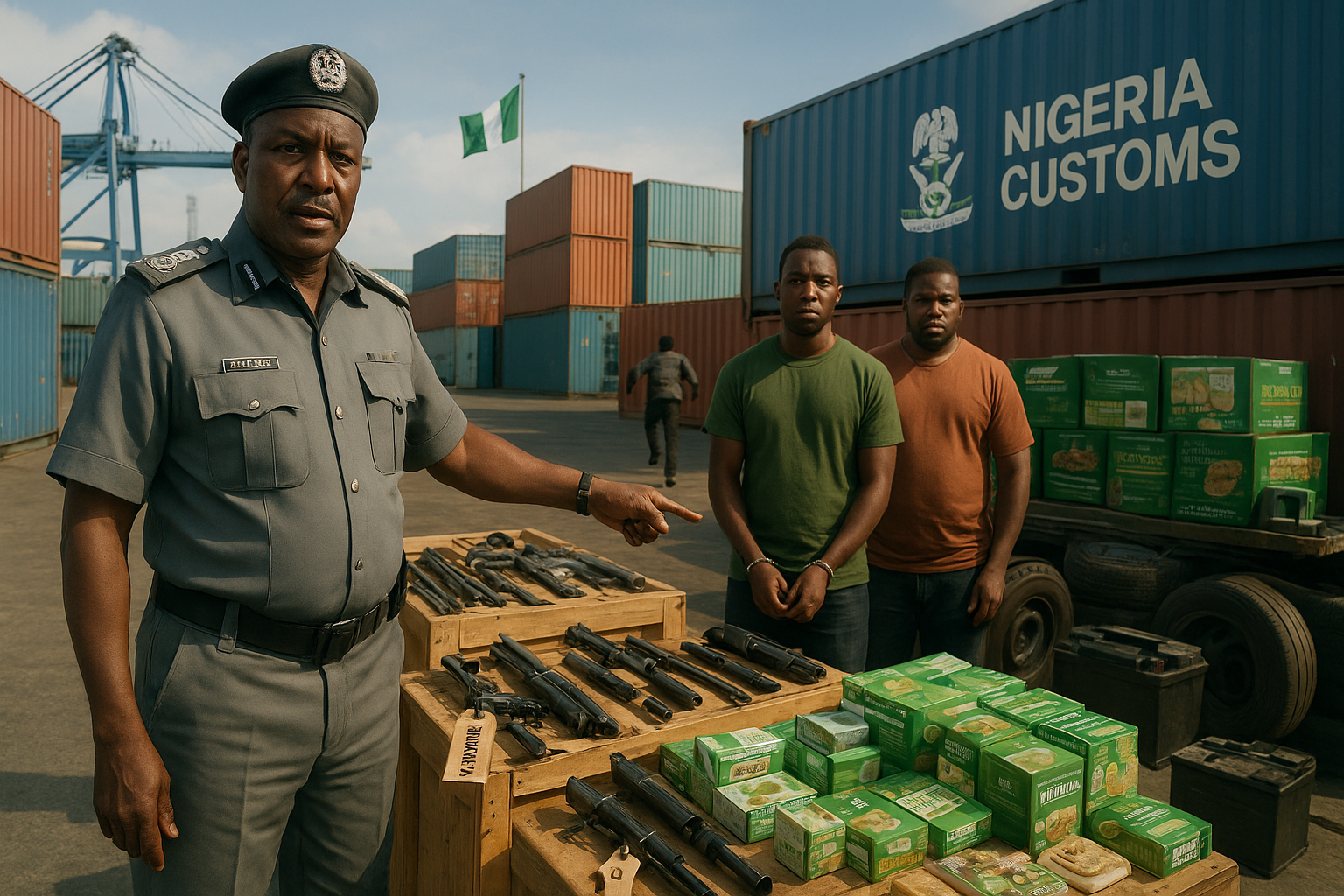
A single flagged shipping container has exposed how far smuggling networks will go to mask illegal cargo inside routine commercial trade. The Nigeria Customs Service says it intercepted a container carrying knocked-down components for more than 140 pump-action rifles at Tincan Island Port, alongside a separate seizure of cannabis-infused products valued at over ₦373.8 million. Comptroller General Adewale Adeniyi disclosed both operations on Thursday, framing them as evidence of an intelligence-driven enforcement push ahead of Nigeria's next general election cycle.
The firearm components arrived aboard MV VELIKA in early July and sat under enhanced monitoring before officers cracked open the crates and found parts preliminarily identified as JoJeff pump-action rifles. Two suspects are in custody; a third remains at large. This is the kind of case that regulators anywhere point to when justifying tighter risk profiling at ports of entry - the same logic that, in regulated cannabis markets abroad, drives investment in traceability tools. Operators overseeing licensed retail elsewhere have leaned on systems such as dispensary software in Alaska to keep inventory, manifests and compliance logs auditable precisely because unmonitored supply chains invite exactly this kind of exploitation. dispensary software in Alaska
The second seizure is where the cannabis angle sharpens. Two 40-foot containers were found carrying Delta-8 cannabis-infused pre-roll cookies, gummies and cookies, hidden among used vehicles, generators and batteries - a concealment method that mirrors tactics used globally to move regulated or restricted goods through informal channels. Nigeria has no legal adult-use or medical cannabis retail market comparable to those in North America, so any cannabis-infused product entering the country arrives outside any licensing, lab-testing, or compliant-packaging framework. That absence of oversight is the real story here, not the product category itself.
Why Trade Channels Remain a Weak Point
Legitimate import and export systems depend on a baseline level of trust: manifests are declared, containers are inspected on risk criteria, and goods move through customs without every single unit being physically opened. That efficiency is also the vulnerability. Smugglers count on volume and routine to slip contraband past inspectors, betting that a container full of ordinary consumer goods, vehicles or machinery won't draw a second look. Adeniyi's comments about "men of the underworld" exploiting ports during election season point to a recurring pattern - heightened political tension tends to coincide with spikes in weapons trafficking attempts, and enforcement agencies typically respond by tightening risk-based targeting rather than blanket inspection, which would grind trade to a halt.
What This Means for Compliance-Minded Operators
For any business operating in or supplying markets where cannabis is legally regulated, this case is a reminder that traceability isn't bureaucratic overhead - it's the mechanism that separates a licensed supply chain from a smuggling operation. Seed-to-sale tracking, verified COAs, and documented wholesale transactions exist precisely to answer the question Nigerian investigators are now asking about an untraceable batch of infused products: where did this actually come from, and who touched it along the way? Multi-state operators and wholesalers dealing with cross-border logistics should treat unexplained irregularities in shipping documentation, unusual concealment of goods, or vague country-of-origin data as red flags worth escalating, not administrative noise to clear quickly.
The Broader Enforcement Signal
Adeniyi's pledge that the Customs Service "will not harbour" internal accomplices speaks to a persistent risk in border enforcement everywhere: insider compromise. No amount of intelligence-driven risk profiling matters if personnel inside the system can be paid to look away. That's a lesson regulated cannabis markets have absorbed too, particularly around licensing integrity and inventory audits, where a single compromised link - a distributor, a courier, a database entry - can undermine an entire compliance chain. The Tincan Island seizures are, in that sense, less about cannabis or firearms specifically and more about whether oversight systems can hold up under pressure. Nigeria's answer, for now, is more scrutiny at the border and a public appeal for tips from ordinary citizens.