
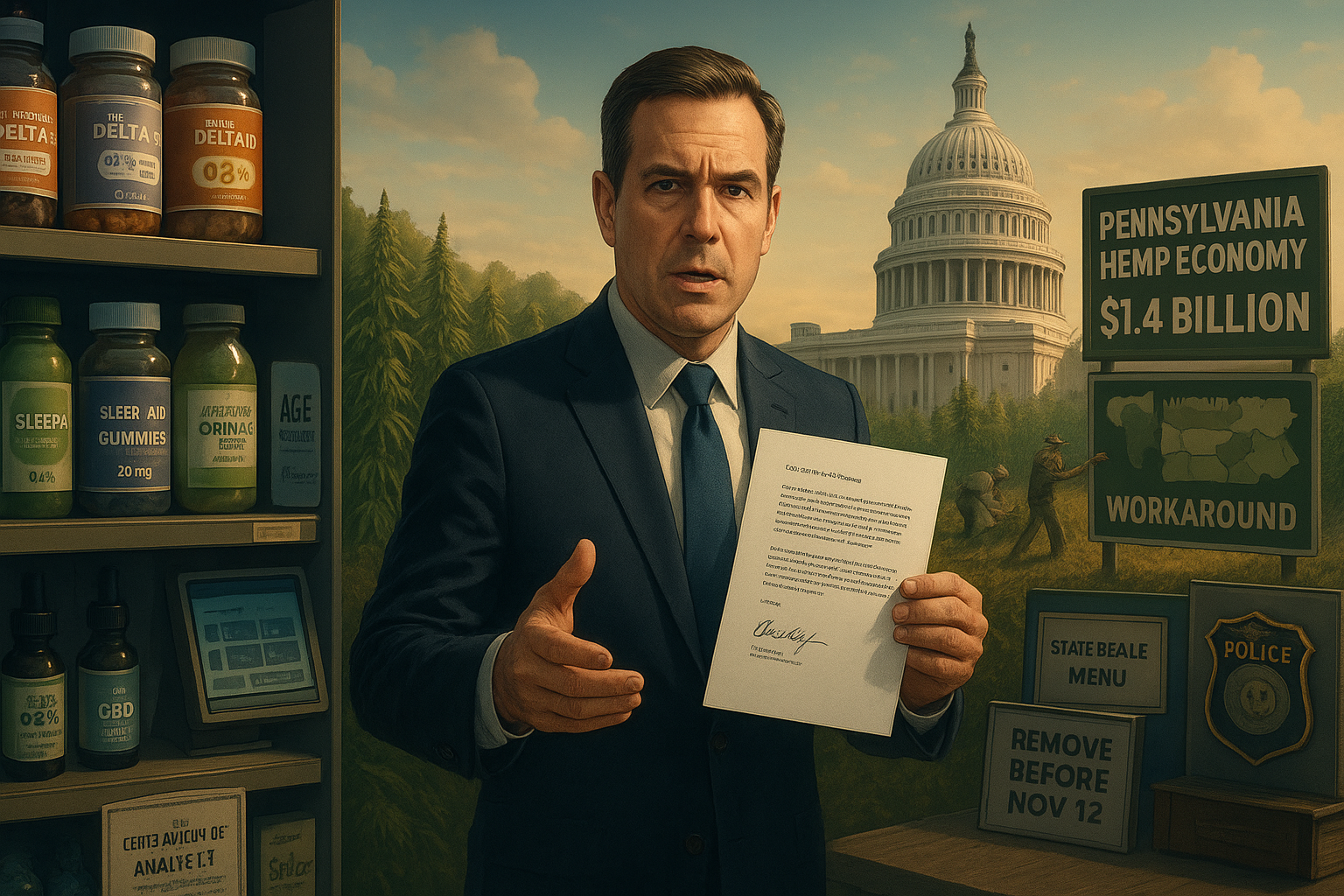
Pennsylvania Attorney General Dave Sunday has joined more than 30 state attorneys general urging congressional leaders not to delay a federal redefinition of hemp set to take effect in mid-November. The letter frames the change as a public-safety fix for a regulatory gap that has let intoxicating THC products spread through gas stations and convenience stores with little oversight. For dispensary operators, wholesalers, and hemp processors alike, the outcome will determine which products can legally stay on shelves and which supply chains simply disappear.
The mechanics matter here. Under the 2018 Farm Bill, hemp was defined by delta-9 THC content at harvest - under 0.3% and a plant was legal hemp; over that, it was marijuana. That threshold said nothing about what happened after harvest, which is how manufacturers engineered delta-8 and delta-10 products with real intoxicating effects while staying technically compliant. The new language Congress adopted last year closes that gap by shifting to a total-THC standard and capping finished containers at 0.4 milligrams. Retailers who have spent years building point-of-sale systems, compliance logs, and SKU management around one THC definition now have to prepare for another - a scramble familiar to anyone who has watched a regulated dispensary retrofit its inventory software after a rule change, the kind of operational lift a Quebec dispensary POS platform handles routinely when provincial cannabis rules shift underneath operators.
A Narrower Fix With Broad Fallout
Here's the catch: the rule doesn't just target intoxicating gummies and vapes sold without age verification. Industry groups estimate the container-based THC cap would sweep up a large share of the non-intoxicating hemp marketplace too - CBD tinctures, sleep-aid gummies, and wellness drinks that carry trace cannabinoids but produce no high. Pennsylvania's Department of Agriculture has licensed 170 hemp growers and 32 processors, and roughly half of that processing capacity feeds consumable manufacturers rather than industrial uses like fiber, paper, or animal feed. Growers who never touched the intoxicating side of the market say they're being caught in a net meant for someone else.
Enforcement Clarity Versus Business Survival
Law enforcement's argument is straightforward: a single national THC standard gives police, prosecutors, and retailers one clear line instead of a patchwork of state workarounds. Several states have already codified the federal definition into their own statutes, and attorneys general warn that letting the deadline lapse would throw those state-level compliance frameworks into disarray. Sunday has been blunt about where he lands on the tradeoff, saying consumer protection outweighs business concerns. Hemp advocates don't dispute the need for guardrails - lab testing, published certificates of analysis, age restrictions modeled on alcohol sales - but argue those fixes require calibrated rulemaking, not a blanket container cap that treats a sleep tincture the same as a synthetic vape cartridge.
What Operators Should Watch Next
The immediate question is procedural: whether the Senate's stopgap funding bill preserves a delay provision, giving lawmakers more runway to separate genuinely intoxicating products from low-dose wellness goods. For dispensary owners and hemp-adjacent retailers, the practical stakes include:
- Wholesale menus built around delta-8 or delta-10 SKUs will need replacement or removal before Nov. 12 if no delay passes
- Compliant packaging and labeling standards may shift again, requiring new COA disclosures and container-level THC math
- Growers selling into consumable supply chains face demand uncertainty even if their raw crop remains legal
- State-level statutes mirroring the old federal definition, including Pennsylvania's, may need legislative updates regardless of the congressional outcome
None of this resolves the underlying tension: regulators want intoxicating products off unsupervised shelves, while a legitimate hemp economy - estimated by advocates to contribute up to $1.4 billion annually to Pennsylvania alone - wants rules narrow enough to survive. Whether Congress threads that needle in three months, or simply lets the broader ban land, will shape hemp retail well beyond this state's borders.