
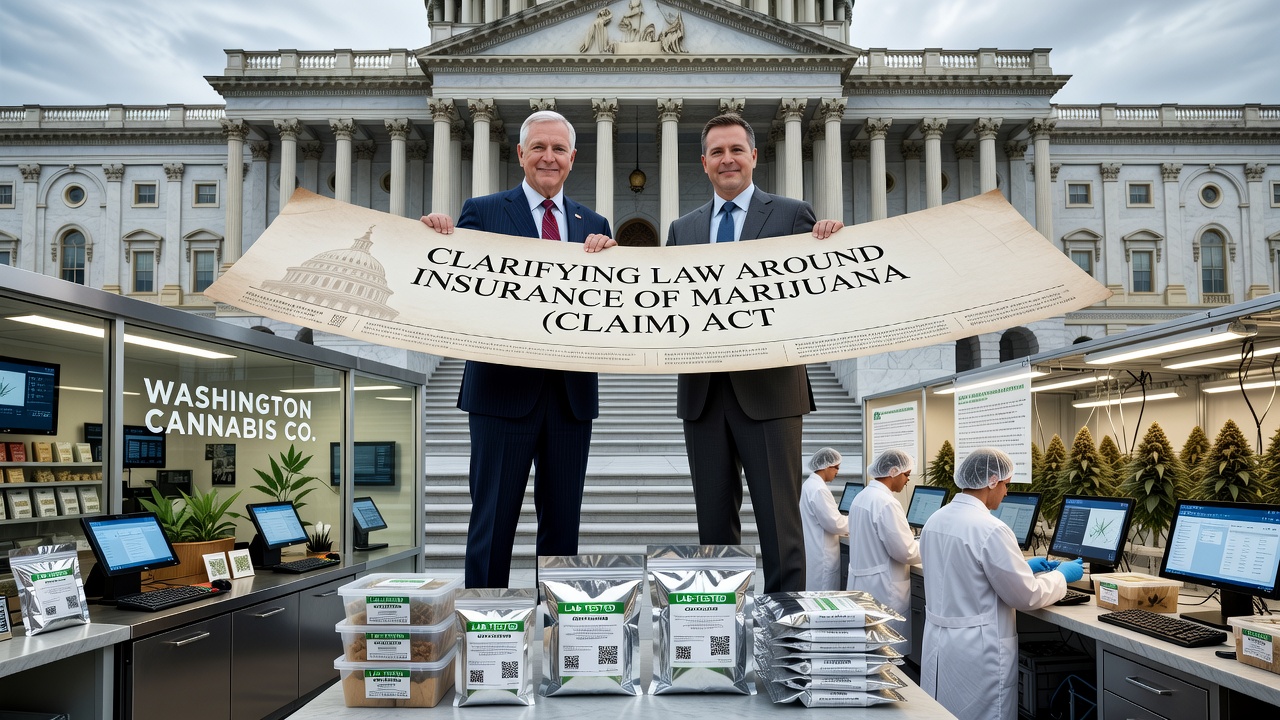
A bipartisan Senate bill filed this week would shield insurance companies from federal penalties when they write policies for state-licensed marijuana businesses. Sens. Kevin Cramer (R-ND) and Ruben Gallego (D-AZ) introduced the Clarifying Law Around Insurance of Marijuana (CLAIM) Act on Tuesday, marking the fourth consecutive Congress in which some version of this fix has been put forward. That repetition tells its own story: the underlying problem hasn't gone away, and neither has the political appetite to at least try solving it.
For dispensary operators and cultivators, the insurance gap is one of those operational headaches that rarely makes headlines but quietly shapes every other business decision. Property, casualty and title coverage remain difficult to secure because insurers face uncertainty about federal exposure when they underwrite plant-touching businesses. No coverage often means no bank financing, since lenders typically require proof of insurance before extending credit lines or commercial mortgages. That's the quiet mechanism driving a lot of the industry's persistent capital problems - not just banking access, but the insurance layer sitting underneath it. Operators managing budroom inventory, delivery manifests and multi-location compliance logs already lean on systems like the best-rated cannabis dispensary software washington operators use to keep seed-to-sale tracking airtight, precisely because thin insurance coverage raises the stakes of any inventory shrinkage or compliance misstep.
What the Bill Actually Does
The CLAIM Act would bar federal regulators from penalizing insurers, brokers or agents simply for serving marijuana-related businesses. It also prevents insurers from terminating or limiting policies solely because a client operates in the cannabis space, and it extends liability protection to individual employees at insurance firms. A GAO study provision would examine barriers facing minority-owned and women-owned cannabis businesses in licensing and financial services access - a nod to social equity concerns that have shadowed state licensing programs for years, with mixed results.
Why Insurance Access Matters for Retail Operations
Insurance isn't a paperwork formality here - it's tied directly to consumer safety and operational resilience. Dispensaries carrying compliant packaging, lab-tested product batches with valid COAs, and point-of-sale systems handling cashless payments still face theft, product liability and property risk like any retailer. Without adequate coverage, a single fire, break-in or liability claim can wipe out a small operator that 280E tax burdens have already squeezed. Adequate insurance also supports safer supply chains, since insurers often require documented compliance practices as a condition of coverage, indirectly reinforcing testing and inventory standards.
The Bigger Regulatory Picture
This bill lands alongside a separate banking-focused measure filed last month and against the backdrop of the DEA's rescheduling hearing, which just wrapped testimony with final briefs due August 17. Sen. John Fetterman's renewed push for full federal legalization adds another layer of noise. None of this guarantees passage - prior versions of the CLAIM Act stalled - but the recurring bipartisan interest suggests lawmakers increasingly view insurance and banking access as separate, solvable problems distinct from the broader legalization debate. For operators, that distinction matters: incremental fixes to financial services access could arrive well before, or entirely apart from, any rescheduling outcome.